Posts

Showing posts with the label landscape photography

Making the move to Capture One
Image
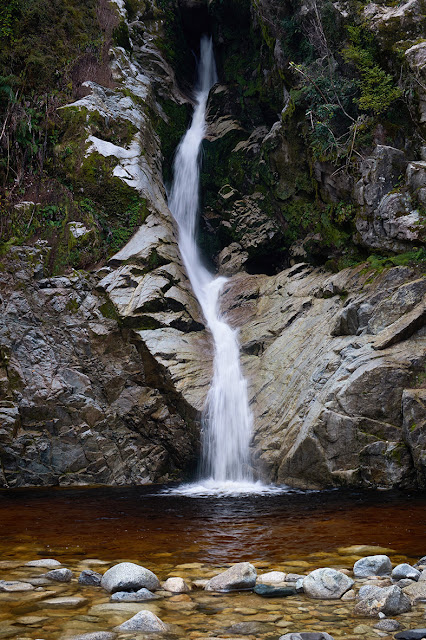
If you have been around the Fujifilm ecosystem for any length of time, you will be well aware of the Lightroom vs Capture One for RAW processing debate. I've looked into this myself in the past here and decided that the dreaded Fuji 'worms' problem with RAF files wasn't so much a Fuji issue as it was an Adobe Lightroom issue. And therein lies the problem. Dorothy Falls , processed in Capture One Pro As an Adobe user myself, I have been loathed to change from Lightroom. I'm used to the UI, and until recently, I liked the results that I have been getting from Lightroom (more on that later). When I looked into the worm issue, I concluded that as long as you didn't oversharpen the files in Lightroom, then you would be fine. But, maybe I was wrong about that? Because recently I decided to test three cameras' image sensors against each other (see that post here ) - the full frame Sony a99, my APS-C Fujifilm X-E2, and an Olympus micro four thirds OM-D E-M5. Much t...
Initial thoughts on the Fujinon XF23mm f2 R WR.

Image
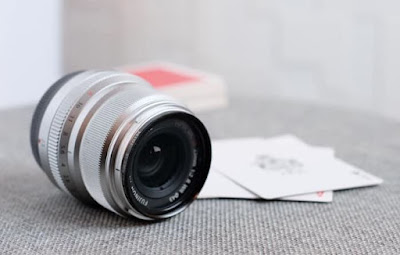
In my last few posts I've been preparing for my 'one lens, one camera' reduction to my photography kit. And finally, after only a few days, the wait is over. My 'new' Fujinon XF23mm f2 R WR arrived - all packaged up in its original box - safe and sound. The image on the left is of the actual lens, purchased off of an NZ Fujifilm Facebook group member (thanks Clint). I think it looks beautiful in all-silver to match my silver and black X-E2, although previously I would probably have been an all-black kinda guy. Having only ever used the XC lenses thus far on my Fujifilm cameras, I was immediately struck by the extra attention to detail on the 23mm f2, as well as the extra heft. Even though the XC16-50mm actually weighs a little more than the 23mm f2 (15 grams more to be exact), the prime ends up feeling a little heavier (or should that be more solid), because of its metal construction. Morning walk, Cobden. Fujifilm X-E2 with Fujinon XF23mm. f5.6 @ 1/750th, ISO 200 ...

In preparation for the 23mm f2

Image
In my last post I outlined my move to a one camera, one lens setup with the Fujifilm X-E2 and Fujinon 23mm f2 prime. It hasn't arrived as yet (any day now), but in preparation for when it does, I thought I would go out in the weekend and shoot around my local beach area using just the 23mm setting on my XC16-50mm zoom lens. Cobden Beach Walk . Fujifilm X-E2 with XC16-50mm @ 23mm (35mm fov equivalent) I've said before that I'm not really a prime lens kinda guy - preferring the versatility of a zoom lens over the possible limitations of a fixed lens perspective. And yet, over the years - and seemingly as I get older - I've come to realise that the 'bring everything so you don't miss anyhting' attitude is something of a flawed (and expensive) premise. No matter how much you try, it's simply not possible to cover all your bases so that you're always ready for 'the' shot. And yet people will still try to achieve exactly that. I should know, since...

My X-E2 'upgrade' continues. Sort of...

Image
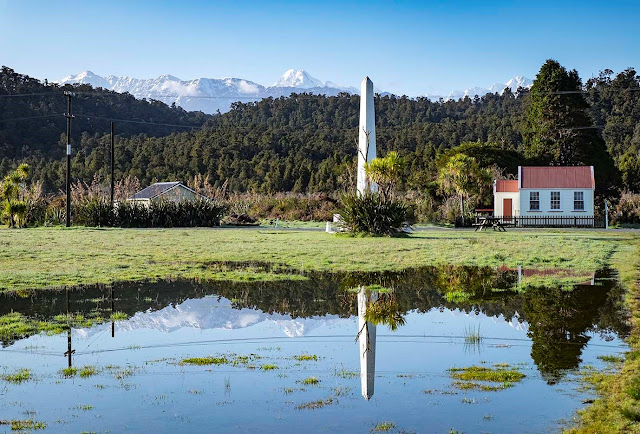
It's been almost two weeks since my last post - a post where I outlined my likely 'upgrade' path of my X-E2 to the more SLR-styled X-T20. A lot can happen in two weeks - and indeed a lot has happened. More than enough to make me want to change my mind about my last post. Let me explain... Old School House, Okarito. Fujifilm X-E2 with XC16-50mm First, I should say that I don't disagree with anything I wrote in my last post here . I believe every word of it. If I was to 'upgrade' my X-E2 body, I would choose the X-T20 (considering present budget constraints). But I also said in my last post that I am not unhappy with my current X-E2, and that any upgrade was more for firmware/software reasons than any megapixel or performance update. Having established that, if I kept everything exactly as it was and simply swapped out the X-E2 for an X-T20, would I really notice a difference in my images? Seriously? After some fairly serious self-reflection and a very timely yo...

Exploring a Ghost Town with the Fujifilm X-E2

Image
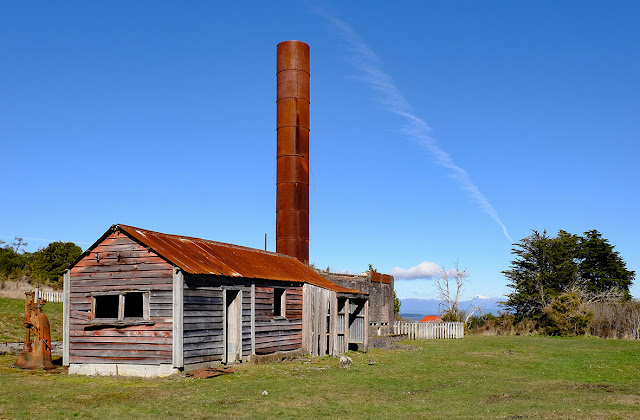
Spring is in the air in New Zealand (as I write this), and the days are getting longer, brighter, and warmer. Sunday is our day of rest - not exactly a Sabbath day where nothing happens - but close enough. This Sunday we had invited some friends for lunch, but they had to cancel at the last minute. Since the day was beautiful and sunny, lunch was already prepared the day before, and we were now at a loss, my wife suggested we go somewhere and take a picnic lunch. Great idea, honey - and I know just the place. Waiuta. Boiler House, Waiuta. Fujifilm X-E2. f/8 @ 1/680th, ISO 400. Ektachrome E100SW recipe Waiuta is now a Ghost Town, but was once a thriving Gold Mining Town for 45 years (from 1906 to 1951). If you love to photograph derelict old houses (like I do) then it's a photographers dream. I've visited a couple of times, but the last time was about 12 years ago, so I was long overdue for a return visit. One of the main buildings that is still somewhat in-tact (due to some p...

My Fujifilm X-E2 film recipes for Landscapes

Image
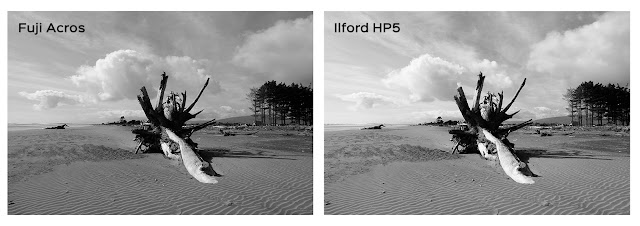
Now that I have gone through my seven custom film simulation recipes on my Fujifilm X-E2 (see previous blog posts), the final stage of the process is to do a comparison. This will help me decide which custom recipe I want to use, depending on the subject and feeling I'm after in my photo.  I think I have a pretty good idea anyway, but seeing them all together will help me confirm my suspicions. The first time I did this, I discovered that all my recipes were far too similar, and I decided to start over again from scratch. Hopefully this time will be different? Black and White film simulation comparison for landscapes. Fuji Acros v Ilford HP5 Since I mostly shoot landscapes, I thought I'd start there with my comparisons. The image itself isn't anything spectacular, and it's taken at the wrong time of the day - noon on a bright day. But this is also a fairly good test since the dynamic range is at the extremes of what the sensor can handle. The compressed images for the w...

Portra 400 film recipe for Fujifilm X-E2

Image
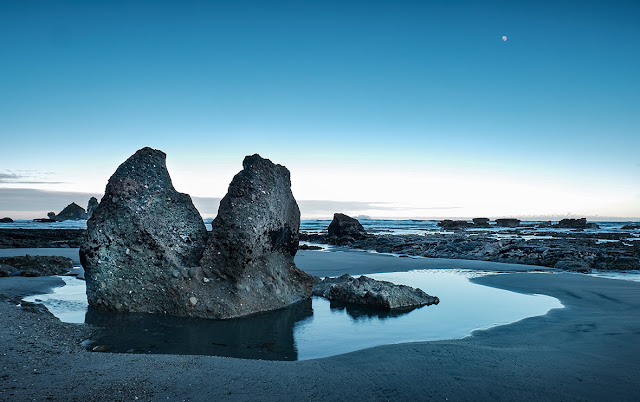
I've been shooting Jpeg-only with my X-E2 for about a month now, and have finally tested out all my film simulation recipes. The last one to test, as indicated in the heading for this post, was my Kodak Portra 400 film recipe - in the C4 slot on my X-E2. Motukiekie Moonscape. Fujfilm X-E2 with XC16-50mm. f/11 @ 1/3rd sec, ISO 100. Portra 400 recipe I've left testing the Portra 400 recipe until last because I think of it as fitting a fairly specific scenario. And I guess the clue is in the name - Portra. Do a quick Google search for Portra 400 on the interwebs and you will get hundreds of the kinds of images that this film was designed for.... Portraits. As you can tell from my blog, I don't do a lot of portraiture. Not now anyways. I used to spend most weekends shooting Weddings, and I guess the Portra film simulation would have come in very handy in those settings. But now I'm mainly a landscape photographer (if I'm choosing what to shoot), so a 'Portra' s...

Should you post-process a Fujifilm Jpeg?

Image
One of the major arguments for shooting Jpegs instead of RAW is that the 'look' you want is already baked into the file and you don't need to post-process the image. The whole SOOC (straight out of camera) movement has become very popular with the rise of Fuji film simulations and custom 'recipes'. I'm having a blast shooting with my custom film recipes on the Fuji X-E2 - but does this really mean that I'm only showing images SOOC? Is there no post-processing involved at all? And if there is, how much can you do on 'only' a Jpeg? Well, to answer the first question - No, I'm not just showing images SOOC. I do still process my Jpegs to get the final image. Some admittedly more than others. I thought it might be worthwhile looking at a few recent examples, where I have done a reasonable amount of post-processing work on a Jpeg, and discuss why. Original image. E100SW recipe SOOC On a recent trip to Rapahoe Beach to try out my Acros film recipe (post...

Fuji X-E2 film simulation: Agfa Optima 200

Image
I'm quickly getting through the custom film simulations that I have programmed into the seven slots on my Fujifilm X-E2. And so far, so good. Recently on this blog, I've covered my Kodak Ektachrome E100SW recipe in the prime C1 slot, Fuji Acros recipe in C2, Kodak Gold 200 recipe in C7, and my Fuji Velvia film simulation in the C5 slot. That leaves just three to go; two more colour and one monochrome film simulation. Greymouth River. Fuji X-E2 with XC16-50mm + polariser. f/8 @ 1/70th, ISO 200. Agfa Optima In this post I want to look at the film recipe I have programmed into slot C3 - Agfa Optima 200. Agfa Optima 200 was a professional print film produced by Agfa from 1996 to 2005, and was their sharp, fine-grained print film with natural colours and pleasing skin tones. To be honest I never shot a lot of Agfa colour film, but I did shoot a lot of their black and white film back in the day as they were a supplier to school darkrooms across the country. So why do I have an A...